
Most pages don’t fail because of backlinks. They fail because the basics on the page are weak. I’ve seen sites with solid domain authority stuck on page 2 just because titles, intent, and structure were off. On-page SEO is still the fastest lever you control.
Key Takeaway
- On page SEO checklist is about alignment, not just optimization
- Search intent matters more than keyword placement
- Small fixes on a single page can move rankings within weeks
What is an on page SEO checklist and why does it still matter in 2026?
An on-page SEO listing is simply a structured list of those attributes on a page that we are supposed to cater to when we consider matchability. It is still a thing when we think about the need of Google to value page-level relevance and user’s experience in ranking learned by sniper cases.
Banner ads work fine in case a good number of clicks are available after a decent ad with an attractive offering.
For small businesses, this is your edge. Larger companies can surpass your backlinks, but with clarity and intent alignment, you can most definitely outdo them.
Interpreted Takeaway? On-page SEO does not champion keyword stuffing in any case. Rather, you are tasked with making your client’s page the best answer to a query.
How to use this on page SEO checklist to rank faster?
Use this checklist as a repeatable system. Apply it before publishing and revisit it after data comes in.
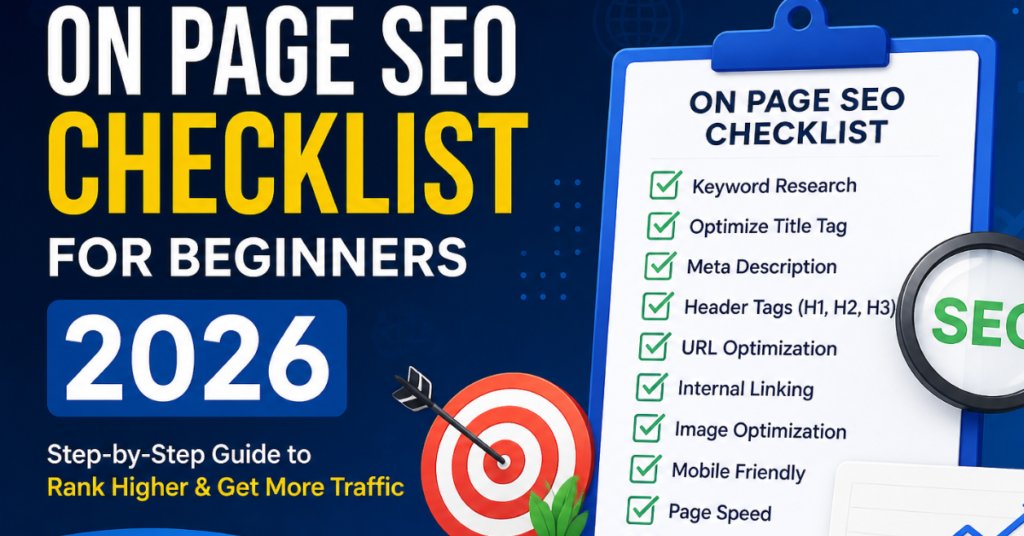
Step by step on page SEO checklist
- Define search intent
Check what type of content ranks. Guides, product pages, or comparisons. - Optimize title tag
Keep it under 60 characters and include your primary keyword naturally. - Write a compelling meta description
Focus on click-through, not just keywords. - Structure content with headings
Use H2 and H3 to break content into logical sections. - Optimize URL slug
Short, clean, and keyword-focused. - Use internal links strategically
Link to relevant pages that deepen the topic. - Add external authority signals
Reference trusted sources to build credibility. - Improve content depth
Answer follow-up questions users might have. - Optimize images
Use descriptive file names and alt text. - Improve page speed and mobile usability
Slow pages kill rankings regardless of content quality.
If you’re building foundational SEO knowledge, this guide on
digital marketing course structure
shows how these concepts connect across channels.
Clear takeaway: A checklist only works if you treat it like a system, not a one-time task.
What are the most important on page SEO checklist factors right now?
Focus on intent, structure, and engagement signals. These outweigh minor technical tweaks.
Core ranking factors you should prioritize
Column headers: Factor, Why it matters, Impact level, Effort required
Row count: 6
| Factor | Why it matters | Impact level | Effort required |
| Search intent match | Aligns content with user expectations | High | Medium |
| Title and CTR optimization | Improves click-through rate | High | Low |
| Content depth | Increases topical authority | High | High |
| Internal linking | Helps distribute authority | Medium | Low |
| Page experience | Affects user retention | Medium | Medium |
| Image optimization | Improves accessibility and speed | Low | Low |
Bold takeaway: If your content doesn’t match intent, no amount of optimization will fix rankings.
How do you optimize content for search intent in 2026?
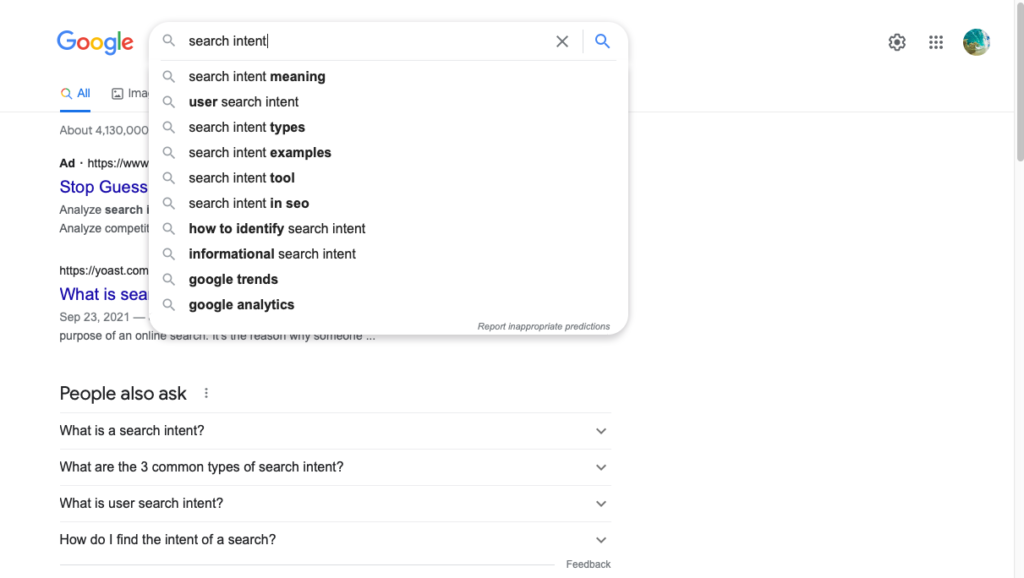
Start by analyzing the SERP before writing anything. Google already shows you what it wants.
Search your target keyword and look at:
- Type of content ranking
- Format such as list, guide, or video
- Depth of coverage
If top results are detailed guides, don’t publish a thin article.
Real example
A local training institute tried ranking for SEO course. No traction.
They switched to:
SEO course fees in Hyderabad
SEO course duration for beginners
Within 60 days, rankings improved and leads doubled. If your goal is faster rankings, this guide on how to rank a new website on Google fast explains how intent and keyword selection work together.
Clear takeaway: Ranking starts with understanding what users expect, not what you want to publish.
Which tools help execute an on page SEO checklist effectively?
Use tools to validate decisions, not make them blindly.
Tool comparison for on page SEO
Column headers: Tool, Best use case, Free availability, Skill level
Row count: 5
| Tool | Best use case | Free availability | Skill level |
| Google Search Console | Performance tracking | Yes | Easy |
| Ahrefs | Competitor analysis | Limited | Medium |
| SEMrush | Content optimization | Limited | Medium |
| Surfer SEO | On-page scoring | No | Medium |
| Ubersuggest | Keyword ideas | Yes | Easy |
Bold takeaway: Start with free tools and upgrade only when your workflow demands it.
For understanding how Google evaluates pages, refer to how Google Search works.
Where should you place keywords without over-optimizing?
Use your primary keyword in strategic locations, not everywhere.
Place it in:
- Title tag
- First 100 words
- One or two H2 headings
- Naturally within content
Avoid forcing it into every paragraph. That signals low-quality content.
Instead, use variations and related terms. This helps Google understand context better.
Practical example
Instead of repeating on page SEO checklist, use:
SEO page optimization checklist
on-page optimization steps
SEO content checklist
Clear takeaway: Keyword placement should feel invisible to the reader.
Final thoughts on on page SEO checklist
Most people overcomplicate SEO. The truth is simpler. Align with intent, structure content well, and keep improving based on data.
The pages that win are not always the most optimized. They are the most useful.
Clear takeaway: The best on page SEO checklist is the one you consistently apply and refine.


Pingback: Best AI Tools for Digital Marketing in 2026: Top Picks
Pingback: Best AI SEO Tools for Beginners in 2026: Top Tools