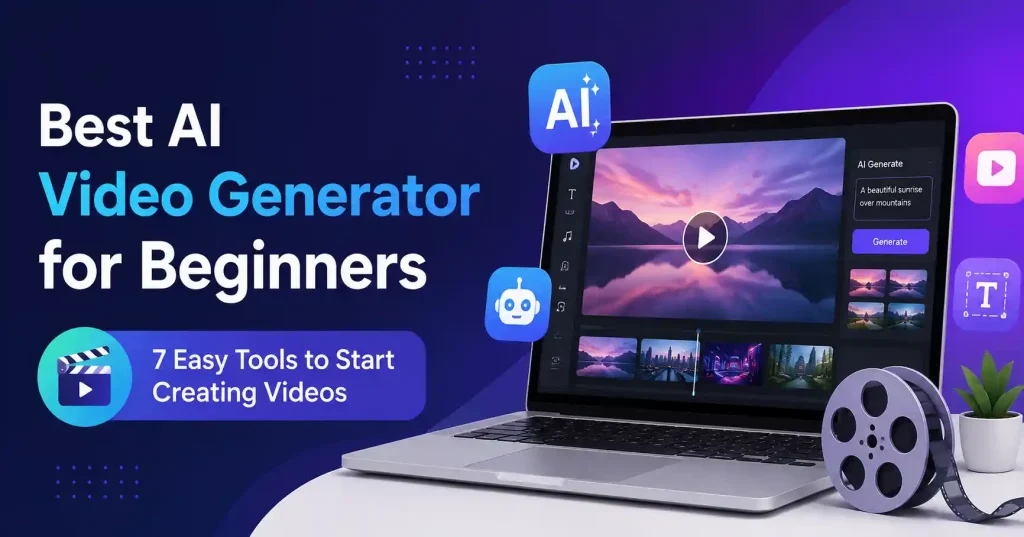

Making a video used to mean wrestling with editing software, hunting for footage, cutting tracks, and burning hours on assembly. AI video tools flipped that script upside down. Now? You feed the system a prompt, a script, or just a rough sketch, and out pops a usable draft. No pro editing background required. But if you are hunting for the best ai video generator for beginners, skip the flashy hype. The right pick depends entirely on your target, A YouTube Short, a product demo, a training slide, or a cinematic clip. They all demand totally different setups.
What Makes an AI Video Generator Beginner Friendly?
A beginner friendly video generator should cut down how many choices you have to make. Sure, a clean interface helps, but that is only part of it. You want straight prompting, useful templates, simple editing controls, sensible export options, and enough flexibility to fix whatever mistakes the AI inevitably coughs up.
The best tools don’t always spit out a polished video from a single prompt. Instead, they hand you a solid first draft and keep the next steps painless. That is a far more realistic way to judge any AI video platform.
Take a small business owner who needs a thirty second Instagram clip to pitch a new service. A solid beginner tool can turn a brief description into a script, suggest visuals, pull or generate clips, slap on narration and captions, and let them tweak the result fast. No heavy editing software required.
Best AI Video Generator for Beginners: 7 Tools Worth Trying
There isn’t one winner for every beginner. The seven tools below cover different types of video creation, from simple social clips to AI presenters and more creative visual generation.
1. Canva : Best Overall for Beginners
Canva remains the obvious launchpad whenever video and design need to collide. That familiar drag and drop setup is practically second nature now. Tweak AI drafts right there, without making a fuss.Blend fresh graphics alongside standard templates, stock clips, audio tracks, fonts, wipes, and entire brand kits all at once.This incredible adaptability is what makes Canva so remarkably useful for social media, pitch decks, simple ads, educational videos, and promotional clips.
But the truly game changing aspect is the control you have after creation. If an AI generated clip isn’t quite right, forget about starting all over, Just swap it out, tweak the text, rearrange the layout, and keep working.
Best for: Newbies juggle marketing collateral, design tools, social videos, and slick presentations all at once.
2. InVideo AI : Best for Turning Prompts Into Complete Videos
InVideo AI? It’s a lifesaver if you’d rather just talk your video into existence instead of fighting with the actual editing. Just give it a theme, or even a script, and the platform handles most of the hard stuff.
This is huge for explainer videos, YouTube clips, those fast social media posts, ads, any project where getting a solid first draft, fast, is what matters. It takes your instructions and stitches scenes together, writes narration, finds visuals, and all sorts of other pieces.
But don’t get it twisted: “automated” doesn’t mean “done.” You absolutely have to check the script, the scenes, how it pronounces words, the overall flow. And please, please, make sure the visuals actually match before you hit publish.
Best for:Beginners chasing instant video generation from simple text prompts, completely skipping prep work.
3. CapCut : Best for Short Form Videos
CapCut stays a solid pick for beginners churning out TikToks, YouTube Shorts, or Reels. The interface avoids feeling like an intimidating wall of professional dials and knobs. Smart AI tools effortlessly handle captions, effects, and edits, making the whole grind much faster.
It shines when raw footage sits right on your phone and you just want a clean final cut. Trim the fat. Slap on some text, toss in an effect, auto generate captions, and move on with your day.And output a vertical frame without drowning in a complex pipeline.
Honestly? For those crucial first ten short videos, that straightforward speed beats having a hundred complex features.
Best for: Quick viral clips, punchy captions, reels, tiktok edits, shorts.
4. VEED : Best for Browser Based AI Video Creation
VEED blends artificial intelligence video tools with a standard online editor. That setup helps beginners who want automated assistance yet still crave hands on control over the finished product. Exactly.
You get subtitles, voiceovers, templates, screen capture, stock media, and core editing right in your browser window. No heavy desktop software to master before you can push out a decent video.
It is a smart pick for content marketing. Picture a marketer spinning up an explainer, dropping in captions, polishing the look. And cutting various versions for different social feeds, all in one frantic sitting.
Best for: Creators crave video tools. AI and manual control. Editing, captions, explainers.
5. HeyGen : Best for AI Presenter Videos
Not every video needs cinematic footage. Sometimes you simply need a person explaining something clearly. That’s where AI avatar platforms such as HeyGen are useful.
So you need a video with a presenter, but filming yourself? Hard pass. Perfect, this style totally nails product launches, training, internal updates, even those quick business pitches.The main thing to watch is authenticity. A technically impressive avatar doesn’t automatically make a video engaging. Keep the script conversational and use the presenter format when seeing a person on screen actually helps the viewer understand the subject.
Best for: AI presenter videos, business explainers, tutorials, and educational content.
6. Synthesia : Best for Training and Business Videos
Synthesia focuses heavily on presenter style videos for business communication and training. It runs on a rigid track, delivering solid facts when pure entertainment simply fails.
Take onboarding text. A company can turn that written lesson into a presenter led video, No cameras. No lights. No endless retakes. The team just builds it digitally, Script changes? Just type them in.
It is crazy practical for training you repeat often, especially when staying consistent actually counts.
Best for: Workplace onboarding, learning videos, and corporate presentations.
7. Runway : Best for Creative AI Video Experiments
Runway is better suited to beginners who want to explore generative video itself rather than simply automate an entire video production workflow. It offers more creative control and is useful for generating individual visual shots from text or images.
It’s a different experience from tools that produce an entire narrated video from one prompt. You could write a few short scenes, cherry pick the good ones, and patch them together. It takes a bit more learning. But the payoff matters. Especially if you lean toward cinematic visuals, pushing storytelling boundaries, or playing around with AI video clips.
Best for: Visual experiments, image video tests, dynamic clips, and creators craving ultimate control.
How to Choose the Right AI Video Tool
Before signing up for several platforms, decide what your first actual video will be. A specific project tells you much more than a feature comparison table.
Use this simple process:
- Choose the video format. Select the specific format immediately: short, reel, video, slide deck, ad, tutorial, or training.
- Decide how much automation you want. Prompt to video platforms excel when you need artificial intelligence to shoulder the heavy lifting. Got raw footage instead? An autonomous editor works far better, Simple.
- Check the editing workflow. A great generated clip isn’t helpful if replacing one scene requires rebuilding the entire project.
- Test the free option first. Create one real project rather than making your decision based on a product demo.
- Check exports before publishing. Look at resolution, watermarks, aspect ratios, usage limits, and any restrictions that matter to your workflow.
If you’re also building a content workflow around AI, you may find our guide to Best AI Writing Tools for Blog Posts in 2026 useful for turning video ideas into scripts, outlines, and supporting content.
How Beginners Can Get Better AI Video Results
The prompt you use matters, but beginners often focus on prompts too much. The bigger win usually comes down to feeding the tool actual context.
Stop typing lazy prompts like make a video about digital marketing, Instead? Craft a forty five second vertical video tailored for small business owners. The whole point here is simple: break down three practical ways to drive more traffic straight to their website. Keep the tone friendly and direct. Use clean, readable captions. Wrap the whole thing up with a swift call to action that tells viewers exactly what to do next.
Then fix the draft. Cut dead scenes, smooth out clunky wording, swap out bad visuals, and rewrite the hook so it grabs people instantly. AI spits out raw stuff fast. Your eye decides if it is actually worth watching.
A smart content pipeline runs like this: topic, outline, script, AI draft, human polish, captions, final look, publish. That exact workflow makes turning one single idea into a blog post, a YouTube piece, a short. And a social update dead simple. You can even hook video creation right into the Best AI SEO Tools for Beginners in 2026 if search traffic happens to be your main goal.
Free vs. Paid AI Video Generators: What Should Beginners Choose?
Launch free whenever you can. That goes double if you are still figuring out what kind of videos to make. Free plans and trials let you test the interface, generation quality, editing workflow, and limits before dropping any cash.
Still, do not judge a tool just because it offers a free tier. Watermarks, export locks, low credit caps, crummier output, and locked AI features get old fast if you make videos often.
Open your wallet only after you have built a few projects and know which specific feature saves you hours. By then, you are buying a smoother workflow, not just raw access to AI.
Common Mistakes Beginners Should Avoid
Never expect one prompt to magically yield a finished video. These synthetic clips demand rigorous oversight, including strict fact checking, careful trimming, pacing tweaks, and a sharp eye on visuals.
Stop simply grabbing whichever flashy platform happens to boast the most bells and whistles.
Frankly, bloated software just slows you down, Figure out your actual goals first.
Don’t let algorithms drive your creative decisions, either. Slickness is cheap. Real authority comes from your own examples, genuine product insights, and the unique way you weave the narrative together.
FAQ’s
What is the best AI video generator for beginners?
Canva works great for first timers. The video editor makes sense quickly, giving you solid control once AI whips up the content. Or try InVideo AI instead. It takes a prompt or a script and builds most of the video for you. Different tools for different workflows, honestly.
Can AI generate a complete video from text?
Yes. AI video tools take a basic script and spit out full drafts complete with scenes, voiceover, and captions. The automation level shifts around, though. Honestly, you still get better results if you jump in, review it, and polish the final cut yourself.
What is the best AI video generator for YouTube Shorts?
CapCut just makes sense for beginners cutting short videos. The workflow is fast, handling captions, effects, and vertical sizing easily. InVideo AI serves a different itch. It takes a raw script or a vague idea and builds something when you have no footage at all.
Can beginners create AI videos without editing experience?
Platforms made for beginners skip the heavy tech work of old school video making. Still, you need core skills. Write a tight script, Watch the playback. Cut the dead weight. Make sure that final clip hits just one clear point.
Are free AI video generators good enough?
Fine for learning concepts. Still, before publishing off a free tier, look closely at export resolution, obnoxious watermarks, tight generation caps. And whatever catches hide in the fine print.
Should I use one AI video tool or several?
Learning a bunch of platforms at once? That’s just more work, honestly. Get your main workflow down first. Then, you can bring in a new tool, but only if your existing setup can’t solve a real problem.
Conclusion
Forget the fancy features when you’re just starting out with AI video. The best generator? It’s the one that helps you actually finish your first few videos, plain and simple.
Canva is a solid all rounder. InVideo AI is great if you like typing out your vision. For quick, short videos, CapCut shines, VEED pairs AI smarts with browser based editing. If you need a virtual presenter, HeyGen and Synthesia are your picks. And for the more experimental types, there’s Runway.
Seriously, don’t try to learn everything at once, Pick one actual video you want to make. Get it done, from start to finish. Then, look at where you got stuck or spent the most time. That experience? It’ll tell you way more about what tool you really need than just chasing every shiny new generator out there.
Want a wider view of AI creative tools? Adobe Firefly AI video generator are worth a look.