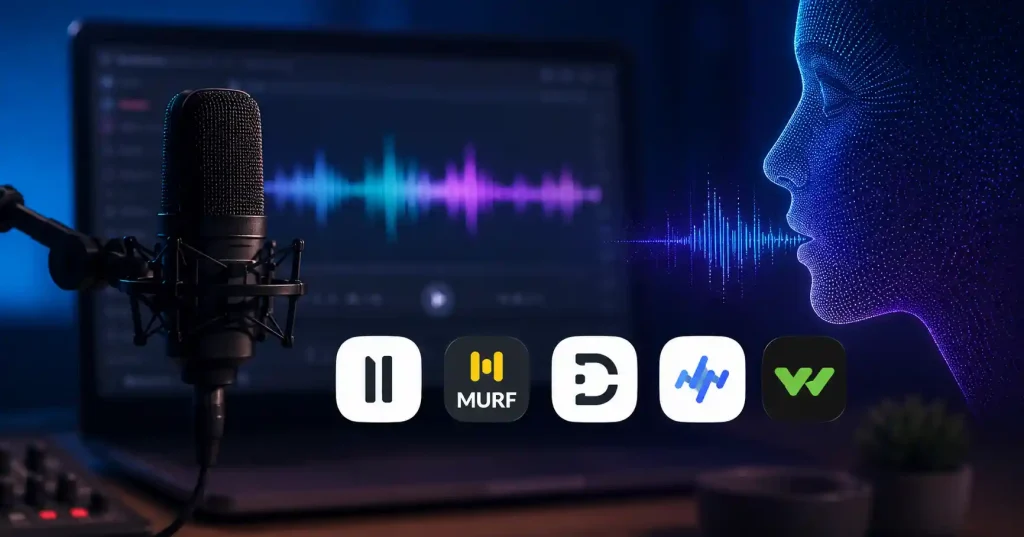

Making voiceovers used to mean endless takes, patching mistakes, scrubbing noise, and starting over just because a single sentence sounded flat. AI voice tools flipped that whole process on its head. Now? You take a finished script, flip it to narration, test out different speakers. And crank out a few variations without ever touching a mic. The real trick lies in picking the right AI voice generator for what you actually build.
If it’s a YouTube channel, natural delivery and real emotion matter most. Podcasters often need solid voice cloning or easy editing tools, Marketers? They want precise pronunciation, tons of languages, and speed. No single tool fits every job, this guide breaks down where each platform actually shines.
What Is an AI Voice Generator?
An artificial intelligence voice generator translates written text into spoken audio through advanced synthesis technology. Today, these platforms let creators tweak pacing, stress, pronunciation, mood, and delivery. It is a massive leap from the jarring, robotic tones of yesteryear.
For modern creators, the true perk goes beyond simple reading. The best part? You fix narration just like you edit text. Swap a product name, rewrite a shaky intro, or tack a fresh paragraph onto a finished video with ease, simply regenerating that single troubled fragment instead of booking an entirely new studio session.
How to Choose the Best AI Voice Generator
Before comparing tools, decide what you need the voice to do. A realistic voice isn’t automatically the best choice if the platform makes your editing workflow slower.
Look at these factors:
- Voice realism: Does this normal speed voice track sound right?
- Expression and control: Sure, those mold with no effort.
- Voice selection:Do these varied voices actually sound authentic across ages and tones?
- Voice cloning: Yeah. A steady voice can work, but only if it fits.
- Languages: It’s stellar for regional and multilingual content, too, you know.
- Editing workflow: Can you fix, tweak, and organize audio instantly without ever leaving your workspace?
- Usage rights: Always check the plan you’re buying and whether its terms cover your intended commercial use.
Best AI Voice Generators for Content Creators
1. ElevenLabs : Best Overall for Realistic Narration
ElevenLabs stands as the top choice for creators who obsess over pure voice quality. The platform packs text to speech, voice cloning, custom design, dubbing, and a massive library. You can use it for YouTube videos, podcasts, or localized projects.
That control is what really makes it shine. Pick from tons of existing voices or build your own. Their models actually sound expressive instead of flat and robotic, Plus, it handles multiple languages easily when you need to target different markets.
Picture this. A faceless YouTube channel drops a ten minute tech script into the app. Generate the audio, swap out a clunky sentence without doing the whole take over. And drop the files straight into your editor. Done.
Best for: Podcasts, voiceovers, audiobooks, storytelling, dubbing, and creators demanding truly organic voices.
Watch out for: Acquiring a full editing suite and voice generator forces you to buy another production tool just to make things work.Try ElevenLabs
2. Murf AI : Best for Structured Voiceover Projects
Murf AI works well for creators making presentations, training files, explainers, or marketing clips. It skips wild voice experiments. Instead, it nails polished narration right inside a built for purpose voiceover workspace. That is the real draw here.
It’s particularly useful when a project contains many sections that need consistent delivery. A marketing team, for instance, could use it to create narration for a product explainer and make changes to individual sections without recording the whole script again.
Murf also makes sense for teams where several people review voiceovers before publication. That collaborative workflow can matter more than having the largest possible voice library.
Best for: Business videos, presentations, e learning, training content, and marketing teams.
Watch out for: Solo creators looking only for quick narration may find some of its broader production features unnecessary.
3. Descript : Best for Creators Who Edit Audio and Video by Text
Descript takes a different approach. Instead of treating AI voice generation as a separate audio task, it puts speech generation alongside transcript based audio and video editing.
Podcasters and YouTubers leaning on written transcripts get a real boost here. You tweak text, hack out bad parts, slice clips, and drop in AI speech without breaking your flow.
Picture finding a factual goof twenty minutes deep into a recording. Instead of dragging yourself back to the mic to redo a whole line, an AI voice tool patches the bad spot right inside your edit window. Simple.
Best for:Podcasts, videos, interviews, plus massive transcript workloads.
Watch out for:When supreme standalone voice generation matters most, a dedicated platform will usually serve you far better in the end.
4. Speechify : Best for Quick, Accessible Voiceovers
Speechify built its reputation on converting text into spoken audio, yet those identical creator tools shine whenever you require narration minus the setup headache.
Simplicity attracts makers who refuse to wrestle with a clunky audio interface. It makes absolute sense for educational clips, rapid voiceovers, and projects where speed genuinely trumps having dozens of granular tweaks to play with.
Imagine building a brief lesson video. Feed your finished script straight in, listen to the output, adjust the wording. And drop that fresh audio right into your editing timeline. Done.
Best for: Fast voiceovers, accessible learning, and effortless text conversion projects.
Watch out for:Top tier creators, listen up: always vet editing and voice tools. Before you commit.
5. WellSaid : Best for Professional and Business Narration
WellSaid is geared more toward professional voice production than casual experimentation. That makes it worth considering for businesses creating training videos, product education, internal communications, or marketing material where consistent narration matters.
The appeal here is predictability. Locking down a steady voice workflow beats hunting for fresh talent constantly, Why? Because churning out similar videos demands consistency.
Best for:Work modules, team videos, and corporate narration.
Watch out for: Independent creators with small budgets may find other tools more flexible for experimentation.
Which AI Voice Generator Should You Pick?
The easiest way to narrow the list is to start with your production workflow rather than the feature list.
- YouTube narration and faceless videos: ElevenLabs
- Business presentations and training: Murf AI
- Podcast and transcript based editing: Descript
- Simple educational narration: Speechify
- Professional business voice production: WellSaid
If you’re unsure, test the same 30–60 second script in two or three platforms. Include a sentence with a number, a proper name, punctuation, and an emotional phrase. Those details reveal problems that a simple “Hello, welcome to my channel” test won’t.
How to Make AI Voiceovers Sound Better
The voice generator can only work with the script you give it. A badly written script often produces unnatural narration even when the underlying voice model is excellent.
Try this workflow:
- Write for speech, not reading. Brief speech just sounds natural out loud.
- Add punctuation deliberately. Punctuation controls pacing. It transforms impossibly dense narration into something easily digestible for readers.
- Spell out unusual abbreviations. That clunky tool botches your acronym? Just spell it out phonetically. Or, you know, say the full words.
- Test difficult names. Product names, people, locations, and technical terms deserve a separate pronunciation check.
- Generate in sections. Breaking a long script into logical scenes makes corrections much easier later.
- Listen at normal speed. Don’t judge a voice only from a short preview. Some voices sound convincing for 10 seconds but become tiring over several minutes.
One more practical tip: don’t make every sentence perfectly dramatic. Good narration has variation. Some lines should move quickly, others should breathe, and important statements can use a little more emphasis.
AI Voice Cloning: What Creators Should Know
Voice cloning comes in handy if you need steady narration across a massive pile of content. A creator records their own voice just once, then relies on an authorized clone for tweaks, translations, or patches that would normally demand a fresh trip to the microphone.
Cloning someone else’s voice gets messy fast, though. Consent, fake identities, rights violations, it is a legal minefield. Stick strictly to voices you actually have the right to copy, Always check platform guidelines first, especially for commercial work. Take ElevenLabs, for instance. They spell out clear rules about consent.
Treat voice cloning as a production tool. Not a loophole.
FAQ’s
What is the best AI voice generator for YouTube?
ElevenLabs is a strong overall choice when natural narration is the priority. Descript can make more sense if your YouTube workflow is heavily based around transcript editing, clips, and audio/video production.
Can AI voice generators replace a human voice actor?
They can handle many narration tasks, particularly explainers, tutorials, social videos, and other repeatable content. But human voice actors still have advantages when a project depends heavily on unique performance, nuanced direction, or a recognizable personal voice.
Is an AI voice generator free?
Free trials lurk everywhere, Always read the fine print. You will hit frustrating caps on word counts and generation pools, but here is the real kicker: check whether that zero dollar tier actually permits the commercial publishing you need.
Can I use AI generated voices for YouTube videos?
Generally, AI generated narration can be used in YouTube content, but your rights depend on the tool’s plan and terms. Check the commercial use conditions before publishing monetized content.
Which AI voice generator is best for Indian creators?
Look for platforms with Indian voices, accents, and languages rather than choosing solely on English voice quality. ElevenLabs currently provides voices and language support aimed at Indian language and Indian accent use cases, making it worth testing if your audience is in India.
How do I make an AI voice sound less robotic?
Write a script that sounds like real talk. Use smart punctuation. Vary the rhythm. Pick a voice that fits, Keep the parts brief. Listen close for how words land, the pacing, and the stress before you roll the whole thing out.
Conclusion
The right AI voice generator depends heavily on what you are making and the exact control you need over the sound. ElevenLabs is a great starting point for creators who want natural, expressive narration. Murf suits structured voiceovers better. Descript shines at transcript editing. Speechify handles basic narration with ease. WellSaid targets professional business projects.
Do not just trust the polished voice demo. Grab an actual script you wrote, run that same text through two or three different tools, and test them head to head. Check how they handle tricky words, pacing, and editing workflows. Always read the licensing terms too.
The tool that saves you time without making your content sound generic is usually the one worth keeping.
For more AI content creation ideas, see GoTechMantra’s guide to best free AI video generators and its roundup of best AI writing tools for blog posts.