
Most beginners think email marketing begins by picking a platform, like Mailchimp or Brevo. But, not really. It begins with earning someone’s trust.
I’ve watched some businesses spend weeks putting together really polished templates, then get meh results, because they skipped that step where you build an audience that actually wants to hear from you. Meanwhile a plain, text based message sent to an engaged list, tends to bring more clicks and enquiries than a costly promo push that looks great but feels cold.
If you’re brand new to email marketing, don’t stress about fancy automation, or complicated funnels. Just start with the basics, build good routines, and get better after each campaign. This guide goes over practical email marketing tips, so beginners can start using them right away.
Why Is Email Marketing Still Worth Learning?
Email marketing really gives you a more direct line to your audience, without having to rely on those always shifting social media algorithms that change overnight . And unlike social follows, where visibility can get swallowed up, your email list is something you truly own. Each subscriber has picked to receive your messages, so email becomes one of the steadiest ways to build bonds and keep repeat buyers coming back.
Also, email marketing plays well with SEO, content marketing, and even social media. It’s not something you should stack in a separate silo, try blending it into one continuous plan. So if you’re growing your online presence right now, go read our piece on Digital Marketing Strategies for Small Business, because it shows how each channel helps with long term momentum.
Whether you move products, provide services, or run a blog, email helps you stay in touch with visitors long after they’ve exited your website, kind of like a quiet echo that keeps working.
How Do You Build an Email List the Right Way?
Stop telling people “give me your email” like that’s enough, offer a reason to subscribe first, because without value it feels kinda empty. One of the most common beginner errors is buying email lists, and no, those contacts really don’t know your business, so your open rates tend to crawl, you get more spam complaints than you’d like, and overall results look weak. Instead, try to build a helpful thing like a resource, guide or mini course—that visitors actually get right after they sign up.
Popular lead magnets include:
- Free checklists
- eBooks
- Templates
- Discount coupons
- Industry guides
- Exclusive newsletters
Say for instance you run a digital marketing website, you might give away a free “SEO Checklist for Beginners” or something like a downloadable marketing template, kind of like a nice little lead magnet.
Also, keep your signup form not too complicated, just ask for a name and an email address usually converts better than those long, drawn out forms.
When more people show up on your website, growing your email list gets a lot easier. If you feel stuck and can’t attract visitors, check out our guide “How to Increase Website Traffic Without Ads” , it covers real tactics for improving organic traffic without depending fully on paid campaigns.
| Lead Magnet | Best For | Difficulty | Conversion Potential |
| Checklist | Beginners | Easy | High |
| eBook | B2B | Medium | High |
| Template | Freelancers | Easy | High |
| Newsletter | All Businesses | Easy | Medium |
| Discount Coupon | Ecommerce | Easy | Very High |
Takeaway: Subscribers join your email list because they expect value, not constant promotions.
What Should Every Marketing Email Include?
Every email should educate, solve a problem, or encourage one clear action.
Avoid writing emails that focus only on selling.
A simple structure works well:
- Interesting subject line
- Friendly introduction
- Helpful information
- One clear call-to-action
For example, instead of saying:
Click Here
Use:
- Read the Complete Guide
- Download the Free Checklist
- Book Your Free Consultation
- Learn More
Try to keep your emails short, so people stay interested while still having enough detail for them to get why they should click. If your message points to a blog or a landing page, double check that that page is really well optimized. When you send subscribers to a slow, or kinda messy page, you usually lose conversions. Before you start promoting your content, take a moment to review our On Page SEO Checklist, to boost page quality and improve the overall experience for the visitor.
Google also recommends following its official Email Sender Guidelines to improve deliverability and reduce the chances of your emails being marked as spam.
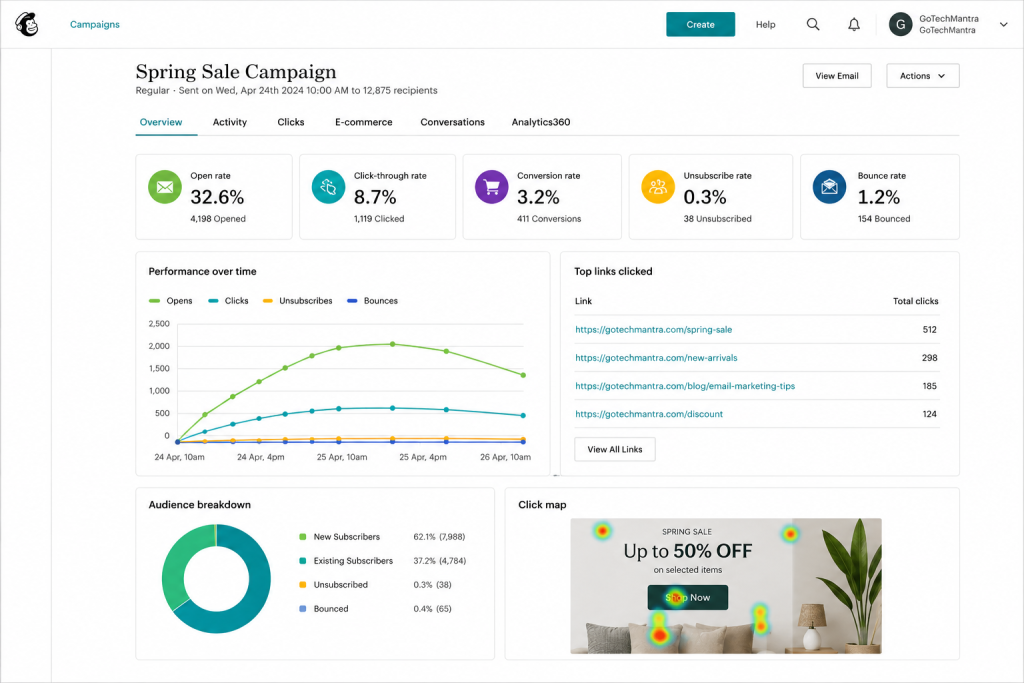
How Can Beginners Improve Email Open Rates?
Build trust, write better subject lines, and send emails consistently… yeah.
A lot of beginners think that clever subject lines, by themselves, increase open rates. But in my experience, people open emails mostly because they recognize the sender, and they assume theres something useful inside.
Some practical improvements include:
- Keep subject lines between 40–60 characters.
- Personalize emails where appropriate.
- Avoid excessive capital letters.
- Don’t overuse emojis.
- Test different subject lines with A/B testing.
5 Email Marketing Mistakes Beginners Should Avoid
Timing matters too, try different days and times to see when your audience is most responsive. Don’t just copy generic recommendations, because it’s more than that. Sometimes one schedule kinda works, then it suddenly doesn’t. So yes, mix it up, test more than once, and watch the results.
Which Email Marketing Tools Should Beginners Choose?
Pick software that is simple to use and kinda helps your business scale as it grows.
Try not to spend weeks comparing every platform, honestly most new starters only tap a little slice of the features that are actually there, like a small percent not the whole thing.
Popular options include:
- Mailchimp
- Brevo
- MailerLite
- ConvertKit
- Constant Contact
Pick one platform, get to know it thoroughly, and try to improve your campaigns instead of constantly switching software, it’s kind of exhausting. Also, the whole successful email marketing thing depends more on your message, what you actually say and how you send it, than on the tool you use, so don’t obsess too much over the gadgets.
Summary: The best email platform is the one you understand and use consistently.
Common Email Marketing Mistakes Beginners Should Avoid
Don’t treat every email as a sales pitch.
Some mistakes I regularly see include:
- Buying subscriber lists
- Sending too many emails
- Ignoring mobile users
- Using misleading subject lines
- Never cleaning inactive subscribers
- Forgetting to track campaign performance
Another overlooked issue is sending visitors to websites that load slow, or have some technical problems here and there. Like, even if your email campaign is really great it still won’t do much, if your website creates a poor experience, for real.
If you’re unsure where to begin, our guide on What Is Technical SEO Explained in Simple Words explains how technical improvements help visitors stay engaged after clicking your emails.
Summary: Better emails and better landing pages work together to improve conversions.
Final Thoughts
Learning email marketing doesn’t need costly software or super advanced automation . What really counts is knowing your audience and just keep sending useful things, consistently, even if it feels a bit repetitive.
- Start small, don’t overthink it.
- Grow your email list ethically, step by step.
- Write emails that actually help people, then send them on a steady rhythm.
- Track what’s performing well.
- Tune and improve with each new campaign you launch.
The companies that end up winning with email marketing aren’t always the ones blasting the highest volume of messages. Most times it’s the ones who build confidence, solve real issues, and give subscribers a good reason to keep opening each communication.