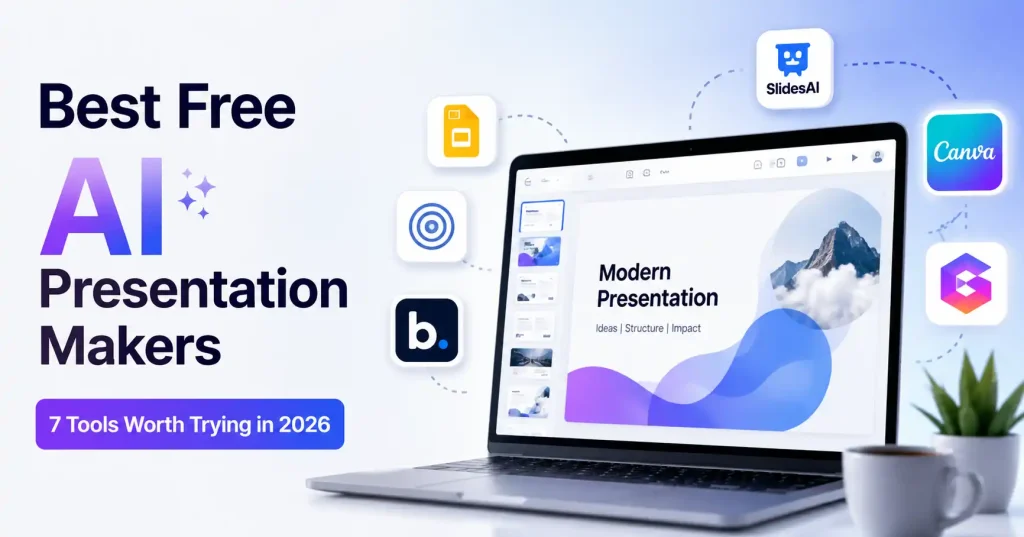

Making a presentation from scratch usually eats up way too much time. You stare at a blank slide, fiddle with layouts, rewrite an awkward headline, and burn an hour hunting for decent images. Free AI presentation makers cut through that annoying setup phase. Drop in a topic, a rough outline, or some raw text, and the tool builds a structured deck for you.
The catch? Not all of them work the same way. Some spit out a solid first draft instantly, while others focus on slick templates, brand control, PowerPoint exports, or plugging right into software you already use. Free tiers vary wildly, too. The right pick simply depends on what kind of deck you are trying to pull off.
What Is a Free AI Presentation Maker?
A free AI presentation maker builds slide decks straight from text prompts, raw documents, or simple outlines using generative intelligence. Depending on the exact tool, it maps the structure, writes copy, picks visuals, and drops in charts or design elements without you lifting a finger. Truly effortless.Truly effortless.That doesn’t mean you can always type one sentence and get a presentation you should immediately deliver to a client.Artificial intelligence generates solid drafts, but it cannot run the entire circus alone, Picture a marketing lead facing a frantic quarterly review. They juggle revenue wins, campaign stats, shifting customer habits, and aggressive goals. The AI sorts that raw stuff into a slide deck. Then the human steps in. Check the math. Drop weak slides, Inject the context executives actually want.
Best Free AI Presentation Maker Options
There’s no single winner for every presentation workflow. These seven tools stand out for different reasons.
1. Gamma : Best for Fast AI Generated Decks
Gamma is a strong choice when speed matters. You can start with a topic or brief and quickly get a complete presentation structure with formatted content and visuals.
Its web first approach also makes it useful when you want to share a presentation as a link rather than constantly sending presentation files back and forth. The free plan provides limited AI usage, so it’s worth treating those generations strategically rather than regenerating the same deck repeatedly.
Best for: Fast first drafts, internal presentations, startup pitches, and web based sharing.
Watch out for: Exported PowerPoint files may need some cleanup when you want pixel perfect editing.
2. Canva : Best for Design Flexibility
Canva is a particularly practical option for people who care as much about visual editing as AI generation. Its AI presentation features can help create a starting deck, after which you can manually adjust layouts, images, graphics, typography, and other design elements.
That makes Canva useful for marketers and students who need more than a basic AI generated slideshow. You can also use the same platform for social graphics, documents, posters, and other visual content. Canva’s AI features include free plan access, although availability and usage limits depend on the specific feature.
Best for: Marketing decks, classroom presentations, visual heavy slides, and beginners.
Watch out for: A template can make a deck look polished without necessarily making the story stronger.
3. SlidesAI : Best for Turning Text Into Slides
SlidesAI keeps things simple, Feed it your text, and watch it spin those paragraphs straight into presentation slides. That is a lifesaver when the writing is done and formatting is all that stands in your way.
Best part? It slides right into Google Slides or PowerPoint without forcing you to learn a whole new workflow or abandon old habits.
Best for: Reports, articles, notes, training material, and text heavy presentations.
Watch out for: Design flexibility can be narrower than an all purpose visual platform.
4. Slidesgo AI : Best for Templates on a Budget
Slidesgo mixes AI slide creation with a massive library of ready templates. That helps when you refuse to let some algorithm control your whole visual style.
The smart move? Let AI handle the basic skeleton first. Then pick a template that actually fits your topic and the people sitting in front of you. You keep the steering wheel that way, instead of just taking whatever random design pops up.
Best for: Students, educators, simple business decks, and template driven presentations.
Watch out for: Free usage can come with limits, so check the current terms before planning a large batch of presentations.
5. Prezi : Best for Non Linear Presentations
Prezi is worth considering if conventional slide after slide presentations feel too restrictive. Its distinctive zooming canvas can work well when you need to move between a central idea and supporting topics.
It’s not the obvious choice for every business presentation. But for education, storytelling, workshops, and presentations where relationships between ideas matter, the format can be useful.
Best for: Interactive storytelling, education, workshops, and visual explanations.
Watch out for: The movement heavy style can become distracting if every section is treated like a visual effect.
6. Beautiful.ai : Best for Consistent Slide Design
Beautiful.ai focuses heavily on keeping slide layouts organized as you edit them. Rather than giving you complete freedom to move every element anywhere, its smart layout approach helps maintain visual consistency.
That approach totally shines for teams cranking out pitch decks. You skip heavy designer fees for minor tweaks, landing rock solid formatting instantly without any fuss whatsoever.
Best for: Business presentations, recurring reports, and teams that prioritize design consistency.
Watch out for: Its free access is more limited than tools built around genuinely free long term plans, so check the current offer before committing to it.
7. Presentations.ai : Best for AI First Presentation Workflows
Presentations.ai is designed around generating presentations from prompts and structured information.It helps when you want to leap straight from a rough notion to a finished deck instead of burning hours on design work first. That workflow suits occasional creators. Perfect for the rare pitch, proposal, or business update. Just let the machine take the wheel for that clunky first pass at the outline and watch the heavy lifting vanish entirely. Best for: Prompt based deck creation, business presentations, and quick prototypes.
Watch out for: Always review generated claims, wording, and slide hierarchy before presenting.
How to Choose the Right Free AI Presentation Maker
The easiest way to choose is to start with the final file and workflow, not the AI feature list.
Ask yourself:
- Do you need PowerPoint? If the final presentation has to be edited in PowerPoint, test the PPTX export before building your entire deck.
- Are visuals important? Canva is a stronger fit when you expect to spend time refining images, graphics, templates, and layouts.
- Do you already have the content? SlidesAI can make more sense when you have a report or long document that needs to become slides.
- Do you want a presentation link? A web first platform such as Gamma can be convenient when sharing online matters.
- Will your team make presentations regularly? Consistent layouts and brand controls become more valuable when multiple people create decks.
- How restrictive is the free plan? Check AI credits, export options, watermarks, slide limits, and template restrictions before choosing a tool for ongoing work.
The difference between a useful free tool and an annoying one often comes down to these small restrictions.
How to Create Better Presentations With AI
AI can build the deck, but you still need to provide direction. A vague prompt usually produces a vague presentation.
Try this workflow:
- Define the audience. Tell the tool whether you’re presenting to customers, executives, students, investors, or a general audience.
- Give it the objective. Explain what the audience should understand or do after the presentation.
- Provide source material. Use your actual notes, research, product information, or data instead of asking the AI to invent everything.
- Set a slide limit. Asking for 8–10 focused slides is usually more useful than requesting a huge deck with every possible detail.
- Review the narrative. Check whether each slide naturally leads to the next one.
- Fact check the content. Pay particular attention to numbers, dates, product specifications, customer examples, and industry claims.
- Edit the visuals. Replace generic images and crowded layouts with visuals that actually support the point being made.
For marketers working on the content behind their presentations, Best AI Writing Tools for Blog Posts in 2026 can also help with the research and drafting stage before that content becomes slides.
Free AI Presentation Maker vs Traditional Presentation Software
Conventional programs like PowerPoint and Google Slides hold one massive trump card. Total control, you dictate exact placement. Relying on rigid corporate templates gives you the power to tweak fine details without arguing with some algorithm.
Artificial intelligence presentation builders shine early on, they kill blank page panic and quickly sort messy raw notes into a working skeleton. The real sweet spot isn’t picking sides. Use AI for a rough first draft, then jump into your usual editor to polish the rough edges.
Planning a bigger content pipeline, Best AI SEO Tools for Beginners in 2026 is worth a look. It helps map out and sharpen the exact material that ends up inside your slides later.
Common Mistakes to Avoid
The biggest mistake is presenting the first AI generated version without editing it. AI can create slides that look convincing while saying very little.
Another common problem is putting too much text on each slide. A presentation isn’t a blog post broken into rectangles. Use the slide to communicate the main idea, then put supporting detail into speaker notes or explain it verbally.
Also watch for generic imagery. If a slide is about customer retention, a random photograph of people shaking hands doesn’t add much. A simple chart, customer journey, product screenshot, or specific visual may communicate the point far better.
Finally, don’t confuse attractive design with good presentation structure. A beautiful deck with a weak argument is still a weak deck.
FAQ’s
What is the best free AI presentation maker?
Gamma is a strong choice for quickly generating complete decks, while Canva is better if you want extensive visual editing and templates. SlidesAI is useful when you already have text that needs to become slides.
Can AI create a PowerPoint presentation for free?
Free AI presentation tools frequently export usable PowerPoint files. Yet quality swings wildly. Watch out. Always test that unfamiliar PPTX deck thoroughly before walking into your high stakes meeting.
Is Canva a free AI presentation maker?
Yes. Canva offers presentation creation and AI assisted features through its Free plan, although individual AI features can have usage restrictions or require paid access.
Can AI presentation makers create professional presentations?
They set up a decent baseline, sure. But real quality? That still depends on the brief, your source material, edits, visual choices, and a final review. One click publishing rarely beats a good human editor at the wheel.
Which AI presentation tool is best for students?
Canva and Slidesgo are practical choices for students because they combine presentation creation with templates and visual editing. Gamma can also work well when the priority is generating a quick first draft.
Are free AI presentation makers really free?
Some have ongoing free plans, while others provide limited credits, restricted exports, watermarks, or trials. “Free” doesn’t necessarily mean unlimited, so check the current limits before choosing one for frequent use.
Conclusion
The best free AI presentation maker depends less on a giant feature list and more on your actual workflow. Gamma is a strong option for fast AI generated decks, Canva gives you hands on design freedom, SlidesAI converts existing text, while Slidesgo, Prezi, Beautiful. ai, and Presentations. ai fill other niches.
For occasional presentations, just start with a free plan. Build one real deck before deciding if you actually need more. Feed the AI clear source material, keep your slide count tight, check the facts. And spend time on the final editing pass. That is the exact moment a quick AI draft turns into a presentation people can follow.