
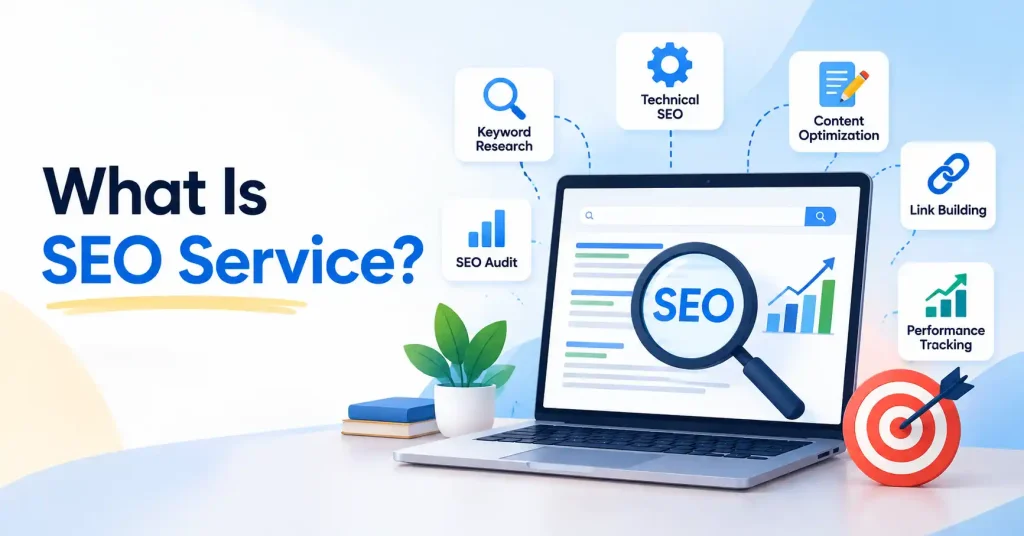

If you have heard terms like SEO agency, SEO package, SEO outsourcing, or white label SEO, you might still be wondering what an SEO service actually is. At its simplest, it is professional work meant to lift a website in organic search results and pull in more of the right visitors.
Traffic matters. Yet SEO is not just one simple task. A proper campaign usually involves deep keyword research, critical technical fixes, content tweaks, internal linking, local optimization, authority building, tracking performance, and a constantly shifting strategy. The exact recipe depends entirely on your site, the industry, the rivals, and your actual business goals.
What Is SEO Service?
An SEO service? It’s really just a collection of tasks aimed at getting your site to appear when people search for what they want. Usually, an expert or company studies search trends, spots overlooked opportunities, optimizes your pages, corrects tech issues. Then they track if those efforts actually improve your organic search positions.
Take a local accounting firm. Say they want more local eyes on their tax prep services. An SEO pro would track down those search terms, buff up the service pages, write helpful extra content, fix broken internal links. And clear up site snags that make things tough to crawl or use.
More traffic isn’t the real goal. The question that actually matters is whether the site pulls in people who turn into paying clients.
What Does an SEO Service Include?
SEO services differ wildly from shop to shop, A tiny local campaign usually fixes up Google Business Profiles and local landing pages. But an online store? That demands deep technical work, category tune ups, product descriptions, and smart internal linking.Common components include:
1. SEO Audit
Every SEO campaign starts with a site audit. This diagnostic catches indexing bugs, broken links, duplicate text, weak titles, sluggish load times, and bad layouts quietly killing your organic traffic.
That report shouldn’t turn into a massive, hundred page doorstop gathering dust on a shelf. Don’t let it happen. The actual value comes from taking raw findings and building a smart, prioritized action plan.
2. Keyword Research and Search Intent
Keyword research reveals what buyers search for when hunting products. But chasing massive volume blindly? That always backfires. You end up attracting useless traffic instead of actual paying customers who want your solutions.
Search intent matters just as much. Someone searching for “what is technical SEO” is looking for information, while someone searching for “technical SEO agency” may be evaluating providers. The content and landing page should match that intent.
3. On Page SEO
On page SEO improves the elements users and search engines encounter on individual pages. This can include headings, titles, descriptions, content structure, images, internal links, and topical coverage.
For a deeper look at one part of this process, see our guide to technical SEO.
4. Technical SEO
Technical SEO targets the nuts and bolts of a site. Think crawling, indexing, structure, usability. Issues with robots. txt, XML sitemaps, canonicals, redirects, JavaScript rendering, or site architecture? They can choke off even the best content.
And look, it isn’t about making endless monthly tweaks. The real win usually comes from hunting down those sneaky errors quietly dragging your whole site down.
5. Content SEO
Content is another major part of SEO services. This can include new blog posts, service pages, product descriptions, comparison pages, guides, and content refreshes.
The strongest approach starts with the audience rather than a keyword list. For example, a software company targeting “CRM for small business” could create a useful comparison guide, supporting feature pages, and practical implementation content rather than publishing dozens of shallow keyword focused articles.
If you use AI during content production, our guide on creating SEO content without keyword stuffing covers a related issue.
6. Link Building and Authority
SEO providers may also work on earning or building relevant links from other websites. The purpose is to improve a site’s authority and help search engines understand its relevance within a topic or industry.
This area deserves careful evaluation when choosing an SEO provider. A large number of low quality links isn’t automatically a successful campaign. The quality, relevance, context, and overall strategy matter.
7. Reporting and Measurement
Rankings never tell the whole story. SEO demands measurement.Campaign reports keep tabs on all the key stuff. Traffic, visibility, leads, keywords, fixes, tasks, you name it, it all boils down to the metrics. The ones that really count. A useful report should answer three simple questions: What changed? Why did it change? What are we doing next?
How Does an SEO Service Work?
Most professional SEO campaigns follow a cycle rather than a one time checklist.
- Understand the business: Find offerings, clients, competitors, plus core goals.
- Audit the website: Find hidden snags, structural flaws, and visibility issues.
- Research opportunities: Evaluate search intent, core topics, rivals, metrics.
- Build a strategy: First, respect the work. Then, and only then, see what’s there.
- Implement changes: Pages first. Then the tech. Content, naturally. Links, the rest, obviously.
- Measure performance:Your site’s health, leads. Traffic. Conversions. See everything.
- Refine the strategy: Let numbers drive your strategy, Fix what lags, and aggressively expand successes.
Search engine optimization isn’t just a simple chore, that explains why agencies pitch ongoing monthly retainers it never truly stops. Search demand, competitors, websites, and business priorities change over time.
What Is White Label SEO Service?
White label SEO is a different delivery model rather than a completely different type of SEO. An agency sells SEO to its client under its own brand while an external specialist or SEO provider handles some or all of the fulfillment behind the scenes.
Consider a web design agency that has several clients asking for SEO. Your agency might lack coders or link builders, Don’t turn clients away, and stop rushing to hire a huge staff. Partner with a white label provider instead. You keep total control over the client relationship, the pricing, direct communication, and your overall market positioning without adding payroll stress.The fulfillment partner handles agreed SEO tasks and supplies deliverables that the agency can present under its own brand.
Why Agencies Use White Label SEO
White label SEO lets agencies expand their service menu without hiring whole departments in house. It rescues you when client demand suddenly outstrips crew capacity. Imagine a branding shop. They might already handle custom web builds, striking visual identities. And bustling social channels for various clients, yet still need this hidden engine.Adding SEO through a specialist partner allows it to offer a broader digital marketing package while keeping the client relationship centralized.
That doesn’t mean outsourcing automatically produces good SEO.The agency needs to audit everything: workflows, communication, quality control, reporting, link building, and deeper content strategies.
How to Choose an SEO Service Provider
Whether you’re hiring an SEO agency directly or selecting a white label partner, look beyond promises about rankings.
Check:
- What exactly is included in the monthly scope?
- Who performs the work?
- How are keywords and content topics selected?
- How are technical issues prioritized?
- What type of link building methods are used?
- How often will you receive reports?
- Who owns the content and deliverables?
- Can the provider explain its recommendations clearly?
Be wary of providers promising exact rankings. They can’t. So many variables impact SEO, and search engines keep their secrets closely guarded. Google Search Essentials
SEO Service vs. Doing SEO Yourself
Look, a business can absolutely tackle some SEO on its own. If they’ve got the talent and, frankly, the spare hours to actually dedicate to it. The easy wins? Things like refreshing old posts, crafting useful new content, and zapping those glaring technical glitches, those are all fair game in house.
Expertise and capacity always win, when a site swells or rivals push harder, SEO becomes brutal. We mean technical audits, heavy content blueprints, endless data crunching, link hunting, and constant testing. Suddenly, hiring seasoned pros just clicks.
FAQ’s
What is SEO service in simple words?
SEO service is professional help that lifts a site higher in unpaid search results. It spans plenty. Think deep keyword research, technical fixes, content tweaks, page updates, and building strong links.
Is SEO a one time service?
Usually, no. You might finish an initial audit or tech project just once, but ongoing SEO? That means constant tuning, new content, and tracking.
What is white label SEO?
An agency hires an outside firm for optimization work, then slaps its own brand on the results. Plain white label SEO, Simple enough.
Is SEO service only about Google rankings?
Sure, rankings matter. But SEO does more. It builds organic visibility, brings in qualified traffic, drives leads and conversions, and boosts discoverability everywhere.
Can a small business do SEO itself?
Small businesses can tackle their own SEO given enough time, skills, and tools. Still, outsourcing just makes sense when workloads swamp the team, or things grow far too complicated.
What should an SEO report contain?
A useful report should connect completed work and performance data to business objectives. Depending on the campaign, it may include organic traffic, conversions, search visibility, keyword trends, technical issues, content activity, and next steps.
Conclusion
So, what is SEO, really? Forget the simple notion of just getting to the top of Google. A genuine SEO service orchestrates meticulous research, clever technical adjustments, compelling content creation, site tuning, and efforts to build real authority and credibility. Then, everything gets tracked, tweaked, and honed relentlessly. The whole point? To boost your visibility in unpaid search results and draw in the exact right kind of visitors.
For agencies, white label SEO is an option. You brand and sell the work yourself, but an expert partner quietly handles the actual execution behind the scenes. Whether you run a business looking to outsource or an agency needing backup, the core questions stay the same. What tasks get done, What is the ultimate purpose? How is success measured, and who owns the final results?
Those details tell you far more about an SEO provider than any lofty ranking promise ever will.