
If your traffic is flat, the problem usually is not that organic marketing stopped working. The problem is that generic content stopped earning the click. Bain found that about 80 percent of consumers now rely on zero click results in at least 40 percent of their searches, and Pew found that users clicked a traditional search result in only 8 percent of visits when an AI summary appeared, versus 15 percent when it did not.
At the same time, Graphite’s analysis of 40,000 large US sites found search traffic was down only 2.5 percent year over year, which means the market did not disappear. It just got less forgiving.
That changes the answer to how to increase website traffic without ads. You do not need more random articles. You need a tighter system that captures demand, redistributes attention, and turns one visit into the next one. For small businesses, that is good news because this rewards focus more than sheer publishing volume.
Key Takeaway
- Search traffic is not dead, but zero click behavior means fewer easy informational clicks.
- The fastest lift usually comes from improving pages that already earn impressions, not from publishing from scratch.
- The best no ads mix is search for discovery, social or partnerships for distribution, and email for return visits.
Why did how to increase website traffic without ads change in 2026?
The playbook changed because search is now a lower click environment, especially for broad informational queries. Traffic growth still exists, but it is moving toward content that is specific, useful, and connected to a return path. A lot of advice still sounds like it is 2019. Publish more blog posts. Target high volume keywords. Wait for compounding. That misses what Google is actually rewarding.
Google says its systems prioritize helpful, reliable, people first content, not pages built mainly to manipulate rankings. The practical implication is simple. If your page can be summarized by an AI overview or a commodity blog post, you need a stronger reason for someone to click through to you. This matters even more for small businesses. You are not competing on publishing output.
You are competing on specificity, proof, and closeness to the buyer. A plumber does not need a giant traffic number. They need the page that ranks for drain repair cost near me, loads fast, answers the question clearly, and gives the visitor a reason to contact them now. The important metric is not total sessions. It is qualified sessions. The point is simple. The way to grow without ads now is not more content. It is more intent, more proof, and better distribution.
How do you increase website traffic with the content you already have?
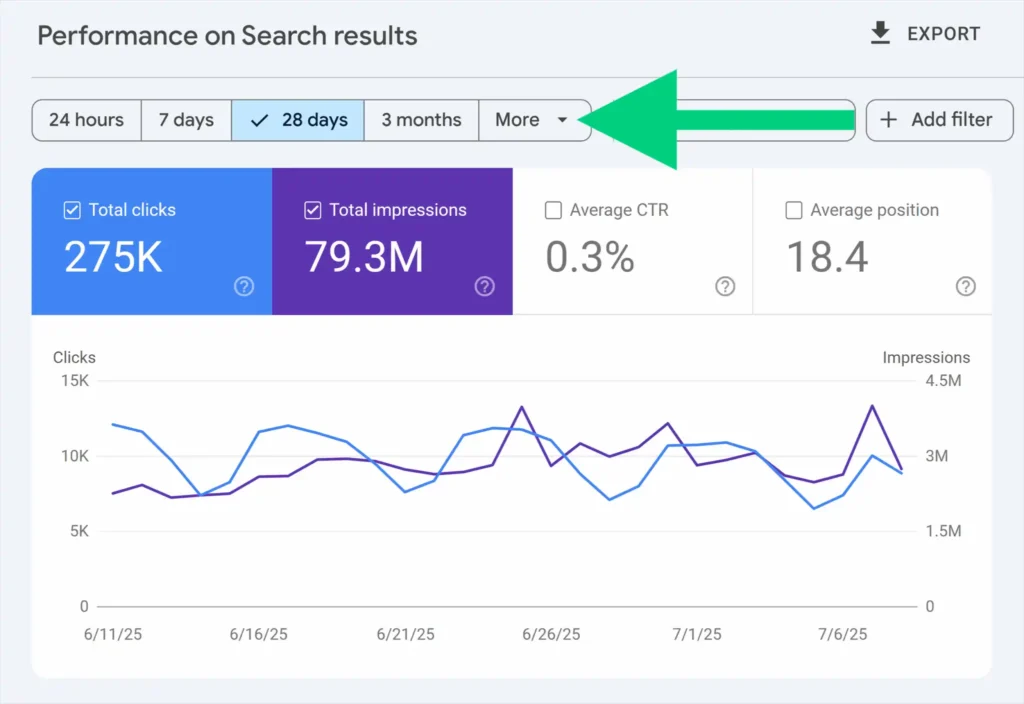
The fastest no ads traffic gains usually come from pages Google already shows but users are not choosing enough. Your existing index is often a better growth asset than your next content calendar. Start with Google Search Console. Google’s own documentation shows it gives you queries, impressions, clicks, and position, which is exactly what you need to find pages with visibility but weak click through or stale intent alignment. If you are asking how to increase website traffic, that is where the shortlist should come from.
- Pull pages with high impressions and modest clicks. These are usually your quickest opportunities because Google already trusts them enough to surface them.
- Look at the queries behind each page and group them by intent. If the page ranks for adjacent questions you do not answer yet, expand the page instead of opening a new URL. If your targeting is still loose, tighten the topic map with this keyword research process before you refresh anything.
- Rewrite the title, introduction, and section order for the click you want now, not the click the page was written for last year. Then run the page through this on page SEO checklist so the refresh improves clarity, structure, and internal paths at the same time.
- Add missing proof. That might be screenshots, pricing context, short case data, comparison tables, or examples from your own delivery work. In a lower click environment, proof is part of the offer.
- Add internal links from pages that already attract traffic. Google explicitly says it uses links to find pages to crawl and as a signal for relevance, so internal linking is not housekeeping. It is distribution.
- Measure the change after the update. Compare impressions, clicks, and CTR, then keep iterating on the pages that respond. Search Console and Analytics together help you see both discovery and on site behavior. There is solid evidence that this works. Ahrefs documented a post it rewrote and republished in August 2024, and reported that traffic later tripled, showing a 302 percent uplift. That does not mean every refresh will perform like that, but it is a strong reminder that existing pages often have more upside than net new publishing. The takeaway is blunt. Before you publish ten new articles, rescue the five pages that are already halfway to winning.
Which channels help you increase website traffic without ads fastest?
The best mix is one demand capture channel, one distribution channel, and one retention channel. Search gets you discovered, distribution gets you seen faster, and retention keeps you from starting at zero every month. HubSpot’s 2025 State of Blogging found that 83 percent of businesses with blogs distribute their content through social media and 47 percent use email newsletters.
In the same study, 38 percent said their blogs mostly sourced traffic organically. HubSpot’s newsletter research also found that creators increasingly use LinkedIn and Facebook to distribute newsletter content, not just email itself. This is the part many SEO only guides miss. Content does not compound if nobody sees it early enough to create second order reach.
| Strategy | Speed to first lift | Compounding potential | Best used when |
| Refresh existing organic pages | Fast | High | You already have impressions and aging content |
| Newsletter plus content distribution | Fast | High | You can publish consistently and own audience access |
| LinkedIn or founder led social distribution | Fast | Medium | You sell expertise, services, or B2B offers |
| Internal linking and topic clusters | Medium | High | You already have a meaningful library of related pages |
| Partnerships and guest contributions | Medium | Medium | You need referral traffic, authority, or new audience access |
Key insight: the fastest channel is rarely the one with the best compounding, so your mix should balance immediate lift and long term control.
If you want to know how to increase website traffic without ads, stop asking which single channel wins. Ask which combination gives you discovery, distribution, and return visits at the same time.
How do you increase website traffic by building a repeat traffic system?
You grow faster when one visit creates the next visit. If every page ends as a dead end, you keep renting attention instead of compounding it. This is where internal linking, content series, email capture, and bottom of page offers matter. Google says links help it determine relevance and discover other pages on your site. Google also notes that Search Console and Analytics together help you understand what happened before and after the click.
In practice, that means every page that earns attention should push the visitor to a stronger next step, whether that is a related guide, a comparison page, a tool, a template, or a newsletter signup. The counter argument is that you should focus on viral social because it is faster. Sometimes it is. But spikes are not systems. A founder post on LinkedIn might drive 800 visits this week and 20 next week.
A refreshed page with clear internal links and a solid email CTA can keep producing long after the post is gone. Search plus retention is slower at the start, but much harder to erase later. A simple example works well here. Imagine a local B2B agency with one strong service page, three case studies, two comparison posts, and a pricing explainer.
If all six pages link toward the service page and the service page links back to proof pages, you improve both crawl paths and buying paths. That is not glamorous, but it is how small sites start behaving like larger ones. The lesson is straightforward. Traffic becomes durable when pages stop acting like isolated posts and start acting like a connected system.
What should small businesses do first to increase website traffic?
Start with the smallest set of pages closest to revenue. Do not open a 50 post content plan until you know which pages already have visibility, which ones convert, and where your site leaks authority. If I were prioritizing this for a small business, I would do four things in the next 30 days. First, pull your top 20 pages by search impressions and identify the five with the best mix of relevance and weak CTR.
Second, refresh those pages with better structure, clearer proof, and tighter alignment to the query. Third, add internal links and one retention CTA on every refreshed page. Fourth, redistribute each refreshed piece through your newsletter, LinkedIn, customer email, or partner network instead of waiting for Google alone to do the work. This is also where we need to be honest about timing.
If you have no rankings, no audience, and no mailing list, organic growth will take time. In that case, partnerships, guest publishing, founder led social, and community participation should run alongside SEO. But if you already have indexed pages and some impressions, the slowest move is often ignoring them while you keep publishing brand new posts.
Ahrefs’ republishing case is a useful reminder that content updates can unlock outsized gains because the page already has history and relevance. That is the answer most source articles miss. How to increase website traffic without ads is not a content volume problem. It is a prioritization problem. The teams that win do not chase every click. They improve the pages already earning attention, distribute them beyond search, and engineer a reason for visitors to come back.

Pingback: 7 Best Free AI Image Generators for Websites in 2026